
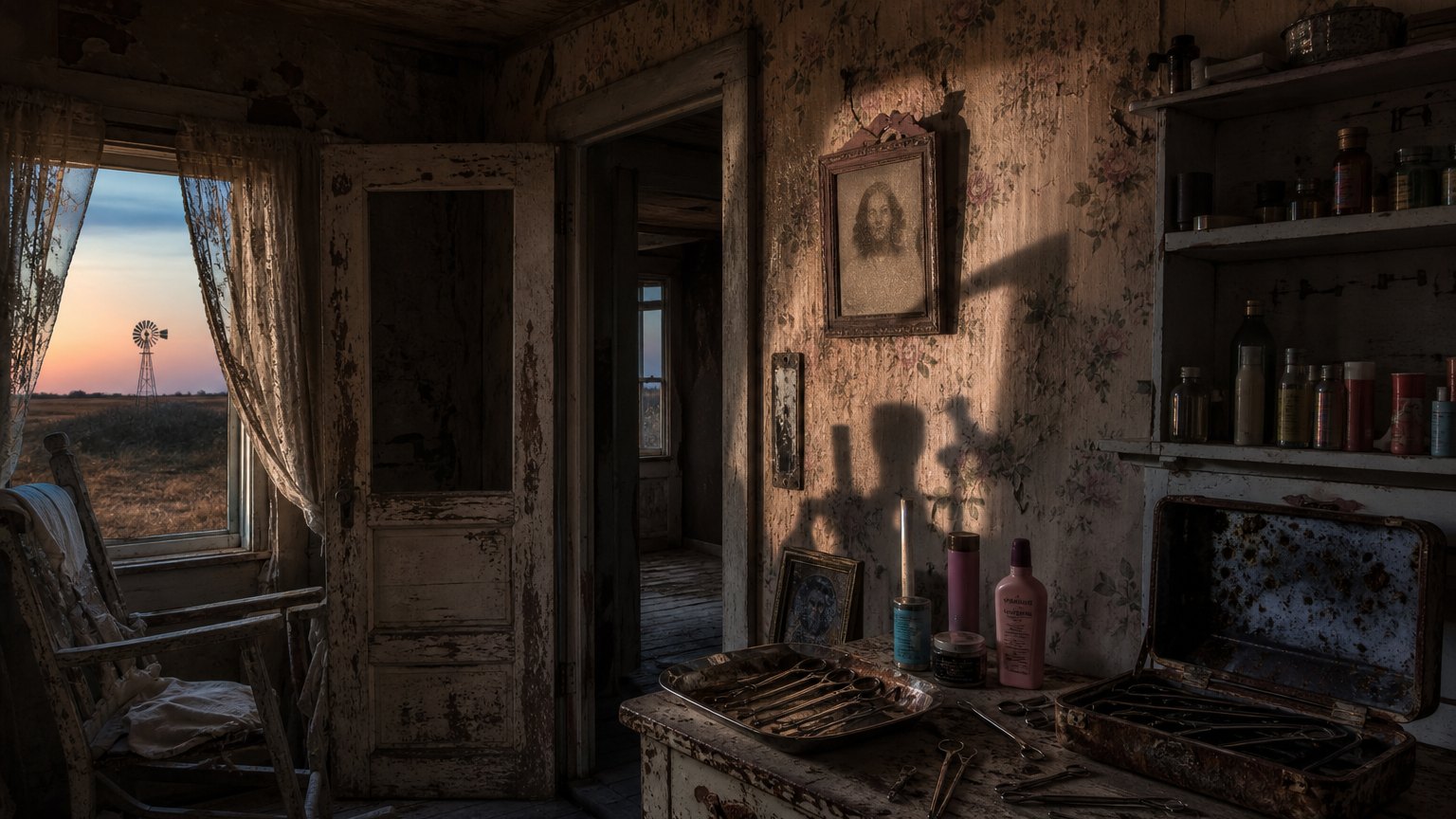
There is a specific breed of horror that thrives on the grotesque intersection of beauty standards and bodily autonomy, and Deborah Richards’ Scissor Mouth aims squarely for that bleeding edge. Casting Tara Reid as the lead and Johnny Pemberton from Fallout in the supporting cast signals a production intent to leverage genre credibility, yet the film’s core premise—a teenage girl escaping years of captivity by her beauty-obsessed mother only to become a serial killer of 'makeovers'—asks us to accept a rather dense thematic payload wrapped in a rural West Texas setting circa 1980.
The Folklore Connection
Richards describes the project as contemporary Southern Gothic horror inspired by an ancient Japanese folktale. This is not merely aesthetic window dressing; the narrative explicitly links societal obsessions with beauty to psychological scars, suggesting that the violence is a distorted reflection of cultural pressure. By transposing this anxiety to early 1980s West Texas, the film attempts to ground high-concept horror in the gritty, sun-bleached reality of the American South. It is a bold move, marrying the visceral isolation of the South with the stylistic precision of Japanese horror traditions.
The Verdict
However, the execution struggles under the weight of its own allegory. While Reid delivers a committed performance as the escaped victim turned avenger, and Pemberton provides necessary tension, the script often prioritizes thematic exposition over narrative momentum. The trail of violent 'makeovers' the protagonist leaves across the region risks becoming repetitive rather than shocking, turning the horror into a repetitive checklist of mutilation rather than a psychological unraveling. Producer Patrick Wirtz’s involvement ensures a certain production value, but it cannot fully mask the script’s tendency to sermonize on beauty standards at the expense of pacing.
Scissor Mouth is a fascinating, if flawed, experiment in genre blending. It demands that viewers consider the horror of forced conformity, yet it occasionally sacrifices the visceral thrills of the genre for sociological commentary. For fans of Southern Gothic horror who appreciate a strong conceptual hook over pure gore, it offers enough atmospheric dread to warrant attention. But for those seeking straightforward terror, the heavy-handed allegory may dilute the impact. Richards has built a compelling monster, but she has yet to fully master the fear it inspires.

Comments (4)